
“Worried for My Life”: Patchy Doctor Strike Disrupts NHS Care as Leaders Warn Impact Will Last
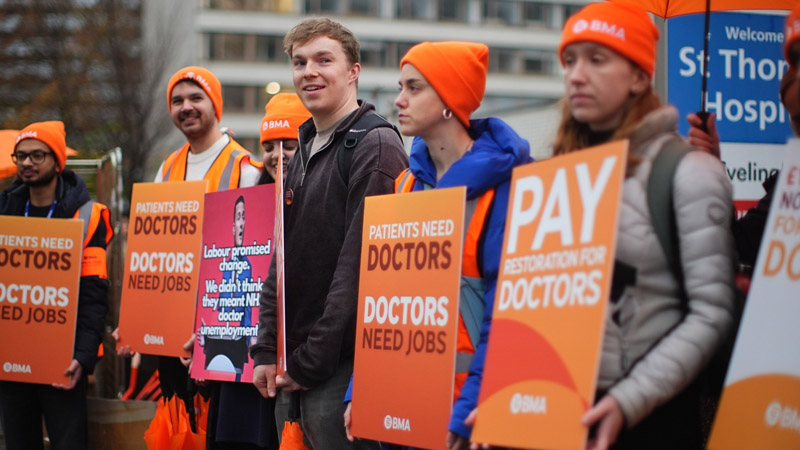
Resident doctors began a five-day strike today with uneven turnout across hospitals, leaving some picket lines thin while disruption elsewhere forced widespread cancellations and warnings that the fallout will be felt “into January and beyond.”
Early figures suggest that in some hospitals, as many as three in four resident doctors reported for work, significantly blunting the effect of the walkout. In other areas, however, participation was far higher, with as few as one in five doctors on duty. Health leaders say the uneven response has still caused major disruption, particularly as the NHS grapples with a record “super flu” outbreak and intense winter pressures, according to the BBC.
Thousands of operations and appointments were cancelled as managers redeployed staff to cover emergency admissions. Cancer patients were among those affected. Shadow health secretary Stuart Andrew told Sky News: “A woman contacted us to say her cancer treatment is not going to happen over these next five days, and in her own words, she says, ‘I’m worried for my life’.”
Prime Minister Sir Keir Starmer condemned the strike during Prime Minister’s Questions, calling it “dangerous and utterly irresponsible” and urging doctors not to “abandon patients.” Conservative leader Kemi Badenoch went further, accusing Starmer of weakness. “The trade unions didn’t just buy him for Christmas, they bought him for life,” she said, adding, “And this matters for all those people out there facing a difficult new year.”
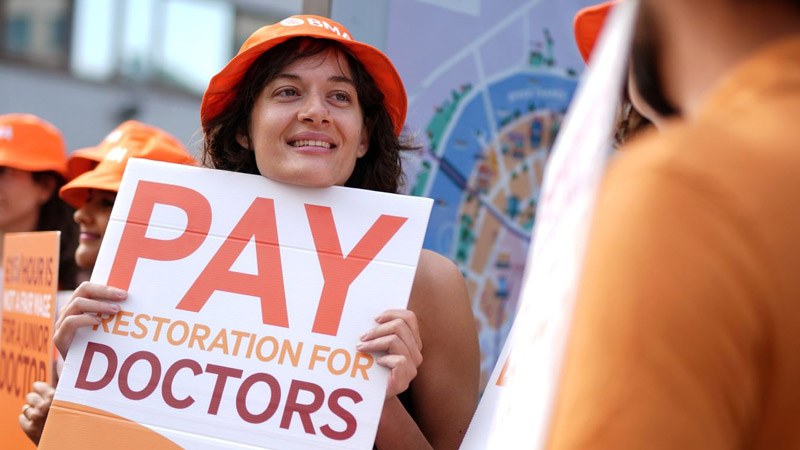
The British Medical Association has called the strike in pursuit of a 26 per cent pay rise. Resident doctors, formerly known as junior doctors, have already seen their pay rise by 28.9 per cent over the past three years. Each five-day walkout costs the NHS about £300 million in lost activity and consultant overtime.
Health secretary Wes Streeting described the situation as “dicey,” warning that the pressure may worsen. He said he is “just as, if not more, worried” about the weeks ahead as staff covering for striking colleagues become “knackered.”
Dr Layla McCay of the NHS Confederation said: “What healthcare leaders are telling us is that the impact we will see from these particular strikes will affect things like the waiting lists, particularly, and the disruption that is being caused this week will be felt all the way into January and beyond.”
Hospitals have been told to aim for 95 per cent of normal activity, though leaders admit this may be harder to achieve than during previous strikes. The last five-day walkout in November led to nearly 39,000 cancellations. If activity drops closer to 90 per cent this time, up to 70,000 appointments could be disrupted.
NHS Providers chief executive Daniel Elkeles said the dispute has reached an “impasse,” likening it to the “worst kind of Groundhog Day.” He urged mediation, saying, “We need to do something to unlock this.”
The conciliation service Acas says it is ready to help. Meanwhile, the BMA has allowed some doctors to return to work in Nottingham maternity services due to “unique and difficult circumstances,” highlighting the strain the dispute continues to place on frontline care.
READ NEXT
- Matty Healy’s mother raises complaint after council worker allegedly insults son in bin dispute
- ‘No telling what Andrew will do’: King Charles fears his brother’s next move
- Rosalía shares health update after food poisoning incident during Milan concert
- Bad Bunny seeks $465,612 in legal fees after winning ‘Enséñame a Bailar’ lawsuit
- Britain’s oldest supermodel Daphne Selfe dies aged 97